
Inventory Turnover Calculator in 3 Simple Steps
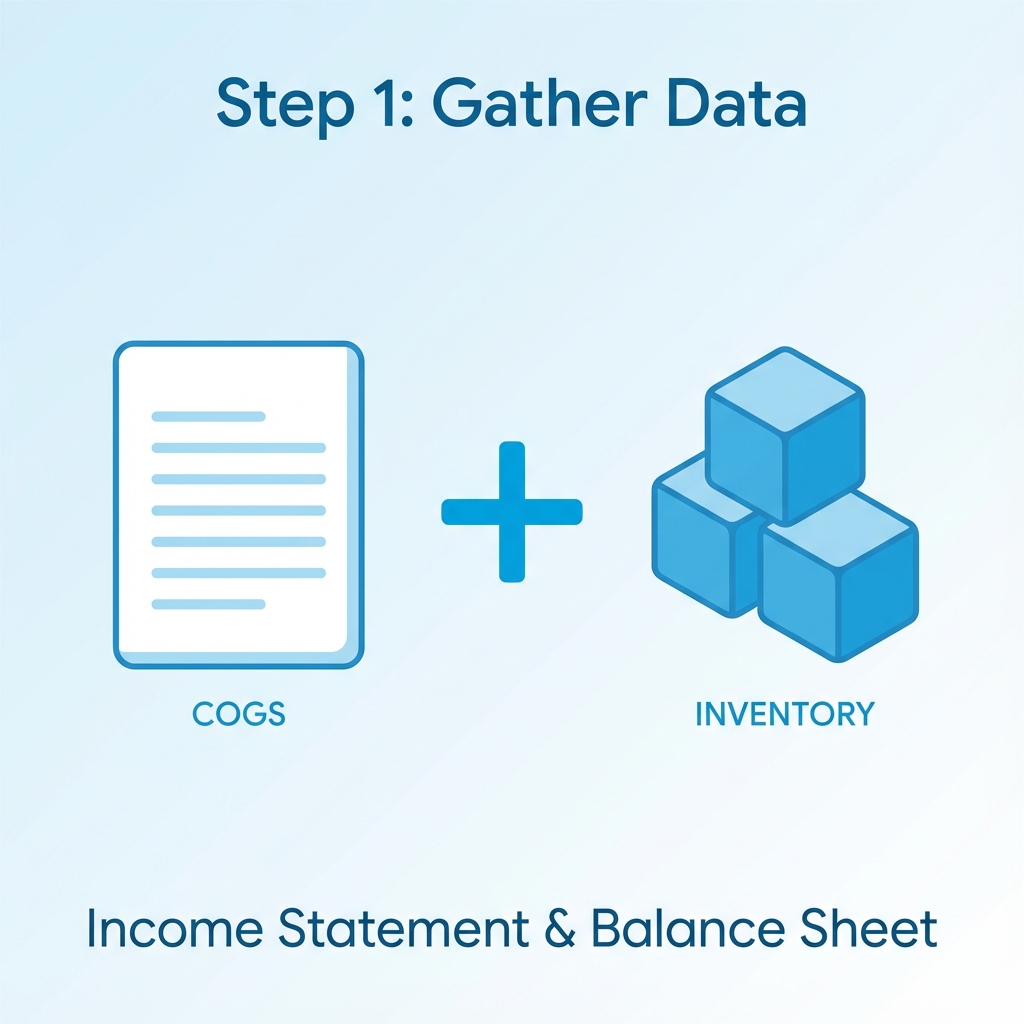
1. Gather Your Data
Find your Cost of Goods Sold (COGS) from your income statement and your Beginning and Ending Inventory values from your balance sheet.
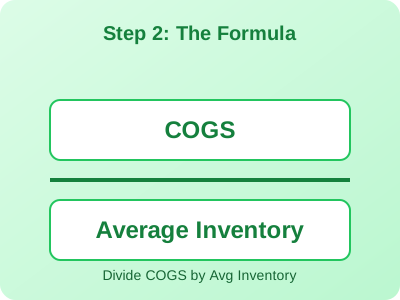
2. Apply the Formula
First, calculate Average Inventory ((Beginning + Ending) / 2). Then, divide your COGS by this Average Inventory figure.
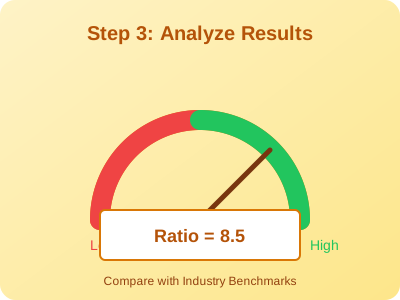
3. Analyze Results
A higher ratio generally means efficient management. Compare your result with industry benchmarks to see where you stand.
I Analyzed Inventory Turnover: Here's What I Found
As someone who has spent years analyzing financial statements and helping businesses optimize their operations, I've found that the Inventory Turnover Ratio is often the unsung hero of efficiency metrics. It's not just a number; it's a pulse check on your business's health.
I've seen businesses with massive revenue struggle because their cash was tied up in dusty boxes in a warehouse. Conversely, I've seen smaller operations thrive simply because they mastered the art of moving product quickly. In this guide, I'll break down everything I know about this critical metric, from the basic calculation to the nuanced strategies for improvement.
Why I Believe This Metric is Critical
In my experience, inventory is a double-edged sword. You need enough to satisfy customers, but too much becomes a liability. The Inventory Turnover Ratio helps you walk that fine line. It answers the burning question: "How fast am I selling what I buy?"
- Cash Flow is King: Every dollar sitting on a shelf is a dollar you can't use for marketing, hiring, or expansion. High turnover frees up that cash.
- The "Freshness" Factor: Whether you sell lettuce or laptops, things go bad. Food spoils, and tech becomes obsolete. A high turnover rate minimizes this risk.
- Storage Costs Add Up: I've consulted for companies paying a fortune in warehousing for products that just weren't moving. Increasing turnover directly cuts these overheads.
The Formula I Use (and Why)
There are a few ways to calculate this, but I always stick to the most accurate method:
Why COGS and not Sales? This is a common mistake I see. Sales figures include your profit margin. Inventory is recorded at cost. Comparing Sales to Inventory is like comparing apples to oranges. Using COGS ensures you're comparing cost to cost.
Why Average Inventory? Inventory levels fluctuate. If I only looked at inventory right after a huge holiday shipment, it would look artificially high. Averaging the beginning and ending inventory gives a much fairer picture of the year.
Interpreting Your Results: My Rule of Thumb
So, you've got your number. Is it good? Bad? Here is how I generally categorize it, though remember that industry context is everything:
- Low Turnover (Under 4): This often raises a red flag for me. It suggests overstocking, poor marketing, or a product line that's falling out of favor. However, for high-margin luxury items, this might be perfectly fine.
- High Turnover (Over 10): Usually a great sign! It means you're efficient. But be careful—if it's too high, I start worrying about stockouts. Are you losing sales because you can't keep up?
- The "Goldilocks" Zone (4-6): For many retailers, this is the sweet spot. You're moving product efficiently without running the risk of constantly running out.
Strategies I Recommend to Improve Turnover
If your ratio is lower than you'd like, don't panic. Here are the strategies I've seen work time and time again:
- Forecast Like a Pro: Stop guessing. Use your historical sales data to predict demand. I can't tell you how many businesses I've seen order "the same as last year" without looking at current trends.
- Discount the Dead Weight: It hurts to sell at a discount, but holding onto dead stock costs more in the long run. Clear it out, get the cash back, and reinvest it in winners.
- Tighten Up Procurement: Work with your suppliers. Can you order smaller batches more frequently? This "Just-in-Time" approach can drastically reduce your average inventory levels.
Frequently Asked Questions
Frequently Asked Questions
What is a good inventory turnover ratio?
+A "good" inventory turnover ratio varies by industry. Generally, a higher ratio (between 4 and 6 for retail) is better as it indicates strong sales and efficient inventory management. However, extremely high ratios might suggest inadequate stock levels, leading to lost sales.
How do I calculate inventory turnover?
+The formula for inventory turnover is: Cost of Goods Sold (COGS) divided by Average Inventory. Average Inventory is typically calculated as (Beginning Inventory + Ending Inventory) / 2.
Why is inventory turnover important?
+It measures how efficiently a company manages its stock. High turnover indicates efficient operations and liquidity, while low turnover can signal overstocking, obsolescence, or weak sales.
What is Days Sales of Inventory (DSI)?
+Days Sales of Inventory (DSI) measures the average number of days it takes for a company to sell its inventory. It is calculated as 365 divided by the Inventory Turnover Ratio.