
Let Me Give You the Straight Answer First
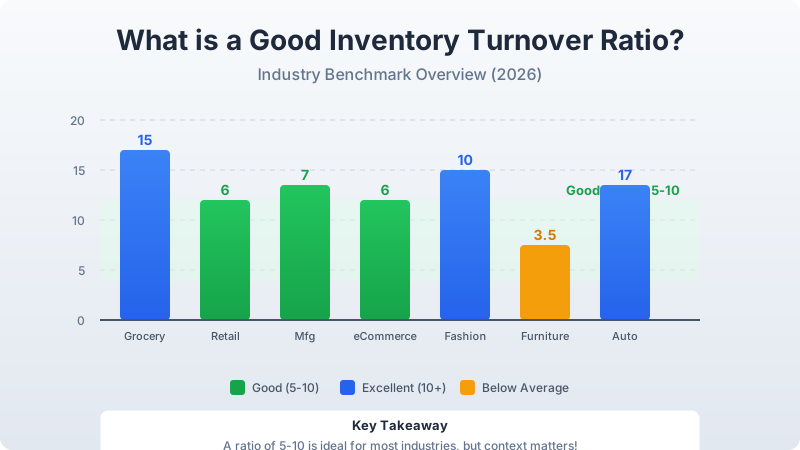
If you're looking for a quick answer, here it is: for most businesses, a good inventory turnover ratio falls between 5 and 10. This sweet spot suggests you're efficiently managing your inventory—selling products at a healthy pace without tying up excessive capital in stock.
But I'll be honest with you—that's just the starting point. The real answer is: it depends on your industry. A ratio of 3 might be terrible for a grocery store but perfectly acceptable for a luxury furniture retailer. A ratio of 15 could signal exceptional efficiency for an auto parts dealer but dangerous stockouts for a boutique winery.
I've spent years analyzing inventory data across industries, and I'm going to walk you through exactly what constitutes a good ratio for your specific situation, how to interpret your numbers, and what actions you should take based on where you stand.
The Golden Range: Why 5-10 Is Generally Ideal
Before we dive into industry specifics, let me explain why the 5-10 range is considered the gold standard for most businesses.
When your ratio hits this range, you're essentially selling and replacing your entire inventory 5 to 10 times per year. In practical terms, this means:
- You're not overstocked: Your capital isn't sitting idle on warehouse shelves collecting dust
- You're meeting demand: Customers can find what they need when they need it
- Your cash flows: Money moves from inventory to sales and back to cash quickly
- Storage costs are manageable: You're not paying for excess warehouse space
- Obsolescence risk is low: Products aren't sitting around long enough to become outdated
But Here's the Critical Context You Need
Industry context changes everything. I've seen business owners panic because their ratio of 4 was "below average," not realizing that for their industry, they were actually outperforming competitors. Let me show you what I mean.
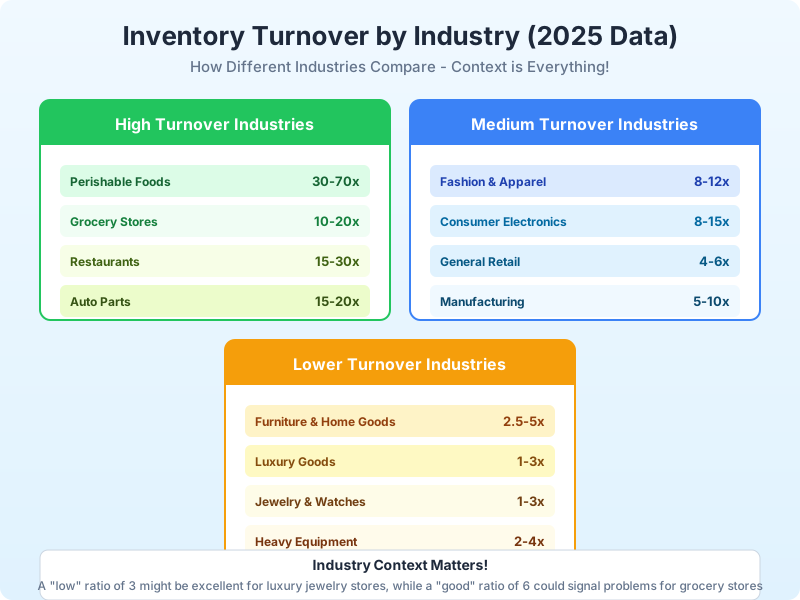
High Turnover Industries (10-70x)
These businesses deal with products that spoil, expire, or have rapid demand cycles. Their "good" ratios would be concerning in other contexts:
- Grocery stores: 10-20x is normal—perishable departments like baked goods can hit 69x
- Restaurants: 15-30x—ingredients must move fast or they're wasted
- Auto parts: 15-20x—high demand for replacement parts drives rapid turnover
- Pharmacies: 12-15x—medications have expiration dates and steady demand
Medium Turnover Industries (4-10x)
This is where most businesses fall. The 5-10 golden rule works well here:
- General retail: 4-6x—clothing, electronics, department stores
- eCommerce: 5-8x—online sellers typically turn inventory faster than brick-and-mortar
- Manufacturing: 5-10x—varies by production cycle and product type
- Fashion/apparel: 8-12x—seasonal trends drive faster turnover
- Consumer electronics: 8-15x—technology obsolescence necessitates rapid movement
Lower Turnover Industries (1-5x)
These industries naturally move inventory slower, and that's often perfectly healthy:
- Furniture & home goods: 2.5-5x—big-ticket items with longer consideration cycles
- Luxury goods: 1-3x—high margins can support slower turnover
- Jewelry & watches: 1-3x—specialized, high-value items with selective buyers
- Heavy equipment/machinery: 2-4x—capital equipment has long sales cycles
Interpreting Your Specific Ratio
Now that you understand the context, let's talk about what your specific number actually tells you about your business. I've categorized ratios into three zones, and here's what each means for you.
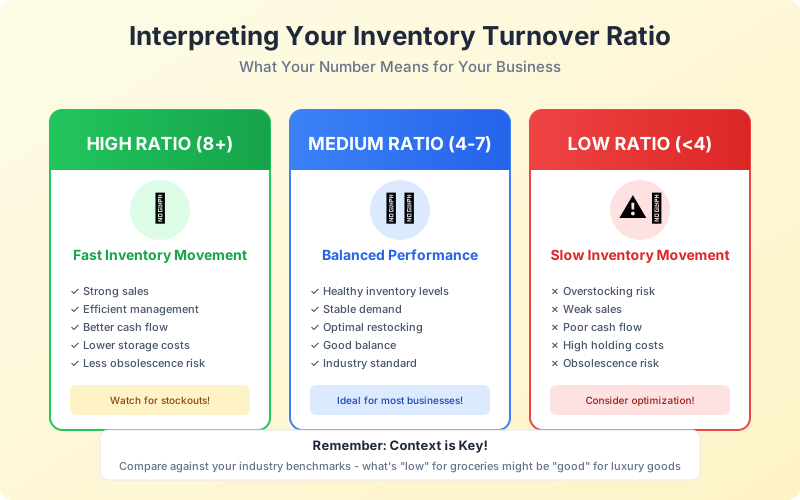
High Ratio (8+): Fast and Efficient—or Risking Stockouts?
If your ratio is 8 or higher, you're moving inventory quickly. This can be fantastic, but it depends on your industry. For a grocery store, 8 might actually be on the low side. For a furniture retailer, 8 would be extraordinarily high (potentially problematic).
The benefits: You're tying up minimal capital in inventory, your storage costs are low, and you're at reduced risk of products becoming obsolete. Your cash flow is likely healthy because money isn't sitting on shelves.
The risks: I've seen many businesses with high ratios struggle with stockouts. Every time a customer can't find what they need, that's a lost sale and potentially a lost customer. You might also be missing out on volume discounts from suppliers because you're ordering smaller quantities more frequently.
Medium Ratio (4-7): The Balanced Sweet Spot
In my experience, ratios between 4 and 7 represent healthy, balanced inventory management for most industries. You're maintaining enough stock to reliably meet customer demand without excessive capital tied up in warehouse inventory.
This range suggests you've found operational equilibrium. Your ordering patterns align with sales velocity, your warehouse utilization is efficient, and your customers can consistently find products in stock. For many businesses, this is the optimal zone to target.
Low Ratio (Below 4): Time to Take Action
If your ratio is below 4, you're likely sitting on inventory for extended periods. Unless you're in a luxury goods or high-margin industry where this is normal, this usually signals inefficiencies that need attention.
Common issues I see: Overstocking based on overly optimistic sales forecasts, weak sales due to poor product-market fit or ineffective marketing, carrying too much obsolete or deadstock, or inadequate inventory tracking and planning systems.
The consequences: Your cash is tied up in unsold inventory that could be used for growth initiatives, marketing, or debt payments. You're paying for storage space, insurance, and possibly taxes on inventory that isn't generating returns. And every day products sit, their risk of obsolescence, damage, or expiration increases.
When a "Low" Ratio Is Actually Perfectly Fine
I want to make something clear: low turnover isn't automatically bad. Some of the most profitable businesses I've worked with have ratios below 3. Here's when you shouldn't sweat a low ratio:
- High profit margins: Luxury jewelers might turn inventory just 2-3 times per year but enjoy 300% margins. Their lower turnover is more than compensated by higher per-unit profitability.
- Strategic stock positioning: Some businesses carry extra inventory to ensure they never miss a sale. If the margin on a guaranteed sale exceeds the cost of carrying inventory, this strategy makes sense.
- Seasonal preparations: Your ratio might dip if you're building inventory before your peak season. This is strategic planning, not inefficiency.
- Supply chain considerations: If suppliers have long lead times or are unreliable, carrying buffer stock is smart risk management.
Factors That Influence Your Ideal Ratio
Beyond industry, several business-specific factors affect what your target ratio should be. I always encourage businesses to consider these when benchmarking:
1. Profit Margins
High-margin businesses can sustain lower turnover because each sale generates substantial profit. A luxury goods retailer with 40% margins doesn't need to turn inventory as fast as a grocer operating on 3% margins.
2. Product Perishability
Products with expiration dates (food, medicine, cosmetics) or short product lifecycles (electronics, fashion) demand rapid turnover. Furniture and jewelry don't spoil or become obsolete as quickly.
3. Sales Seasonality
Highly seasonal businesses will see ratio fluctuations throughout the year. A toy retailer might have low turnover from February to October, then spike in November-December. Annual ratios matter more than monthly snapshots.
4. Supply Chain Reliability
If your suppliers have long lead times or unpredictable delivery schedules, you may need higher inventory levels (and thus lower turnover) to avoid stockouts.
5. Customer Service Strategy
Some businesses prioritize always having products in stock as a competitive advantage. Others compete on price and accept occasional stockouts. Your service strategy should inform your inventory targets.
How to Improve Your Inventory Turnover Ratio
If you've determined that your ratio is lower than it should be, I've got practical strategies to help you improve it. Here's what I recommend:
1. Improve Your Demand Forecasting
The root cause of most inventory issues is poor forecasting. Use historical sales data, seasonality patterns, market trends, and even weather data to predict what you'll actually sell. The better your forecasts, the less excess inventory you'll carry.
2. Implement ABC Analysis
Not all products deserve equal attention. Categorize inventory by importance:
- A items: High-value, high-turnover products—monitor closely
- B items: Moderate value and turnover—regular monitoring
- C items: Low-value, low-turnover items—minimal monitoring
Focus your optimization efforts on A items where they'll have the biggest impact.
3. Clear Out Deadstock Aggressively
I know it's painful to sell below cost, but deadstock is worse. It's tying up capital, occupying warehouse space, and depreciating daily. Run clearance sales, create bundle deals, or donate items for tax deductions. Get that capital working for you again.
4. Optimize Pricing Strategy
Slow-moving inventory might be priced incorrectly. Use dynamic pricing to respond to demand signals. Consider temporary price reductions on aging inventory before it becomes completely obsolete.
5. Implement Just-In-Time (JIT) Inventory
If your suppliers are reliable, shift toward ordering inventory closer to when you actually need it rather than stockpiling. This reduces average inventory levels and increases your turnover ratio.
6. Reduce Supplier Lead Times
Work with suppliers to shorten delivery times. If lead times drop from 6 weeks to 2 weeks, you can carry less inventory while maintaining the same stockout risk level.
7. Negotiate Lower Minimum Order Quantities
High minimum order quantities force you to buy more than you need, inflating inventory levels. Negotiate smaller, more frequent orders even if it means slightly higher per-unit costs.
8. Improve Product Marketing
Sometimes the problem isn't inventory management—it's that products aren't selling fast enough. Invest in marketing, improve product descriptions and photography, optimize your website conversion rate, or enhance in-store merchandising.
Real-World Examples to Illustrate the Point
Let me share two examples from businesses I've advised to show why context matters so much.
Example 1: The Electronics Retailer
A consumer electronics store came to me worried about their ratio of 4.2, which they thought was low. After analyzing their industry, I showed them that the average for their sector was actually 3.5-4.5. They weren't underperforming—they were benchmarking against the wrong standard. The lesson: always compare against relevant industry data.
Example 2: The Fashion Boutique
A boutique clothing retailer had a ratio of 12, which sounds great. But they were constantly running out of popular items and losing sales. Their high ratio was actually a symptom of understocking. We adjusted their purchasing strategy to increase inventory levels, which lowered their ratio to 9 but increased profitability by 23%. Sometimes "good enough" beats "perfect."
Calculate Your Ratio and Compare to Benchmarks
Ready to see where you stand? Use our free calculator to determine your inventory turnover ratio and see how you compare to industry benchmarks.
Calculate Your Ratio Instantly:
Use our free Stock Turnover Ratio Calculator to get your results in seconds. Enter your COGS and inventory values, and I'll show you your ratio, days sales of inventory, and how you compare to your industry benchmarks.
Frequently Asked Questions
Is a higher inventory turnover ratio always better?
+Not necessarily. While a high ratio generally indicates efficient inventory management, extremely high turnover can mean you're running too lean and risking stockouts. This can lead to lost sales, frustrated customers, and missed bulk purchasing discounts. The key is finding the right balance for your industry—enough inventory to meet demand without tying up excess capital.
What's considered a good inventory turnover ratio for retail?
+For general retail, a good inventory turnover ratio typically falls between 4 and 6 times per year. However, this varies significantly by retail segment: grocery stores often achieve 10-20x due to perishable goods, clothing retailers average 4-6x, while furniture and luxury goods stores may have ratios as low as 2-4x. Always compare against similar businesses in your specific retail category.
What is a good inventory turnover ratio for manufacturing?
+Manufacturing businesses typically aim for inventory turnover ratios between 5 and 10. The ideal range depends on your production cycle: manufacturers with fast-moving consumer goods may target 8-12x, while those producing specialized equipment or capital goods might operate efficiently at 3-6x. The key is matching your turnover rate to your production planning and customer demand patterns.
Why is my inventory turnover ratio so low?
+A low inventory turnover ratio typically stems from several common issues: overstocking beyond current demand, weak sales due to poor marketing or product-market fit, seasonal fluctuations, inadequate inventory forecasting, or carrying too much slow-moving or obsolete stock. I recommend analyzing your SKU-level data to identify which products are dragging down your ratio and considering clearance strategies for deadstock.
Can inventory turnover be too high?
+Yes, inventory turnover can definitely be too high. Ratios significantly above your industry average might indicate you're understocked and risking stockouts during demand spikes. This can damage customer relationships and lose sales to competitors. Extremely high turnover may also mean you're ordering in smaller quantities more frequently, missing volume discounts and increasing shipping costs per unit. Aim for your industry's optimal range, not the maximum possible.
How do I know if my ratio is good for my industry?
+The only reliable way to evaluate your ratio is to benchmark against similar companies in your industry. If you're in a competitive market, publicly traded competitors' 10-K reports contain the financial data needed to calculate their ratios. You can also use industry association data, trade publications, or our stock turnover calculator which includes SEC-derived industry benchmarks. Remember that business models matter—compare yourself to companies with similar sales channels and product characteristics.
What's the difference between high and low turnover industries?
+High turnover industries like groceries, restaurants, and auto parts typically have ratios of 10-30x because they deal with perishable goods, high-demand consumables, or products with short lifecycles. Low turnover industries like luxury goods, jewelry, and furniture operate at 1-4x because they sell high-margin items with longer sales cycles. Neither is inherently better—what matters is whether your ratio aligns with your industry's patterns and your own business strategy.
Should I aim for the highest possible turnover ratio?
+No, you shouldn't aim for the highest possible ratio. Instead, target the optimal ratio for your specific business context. This considers your industry norms, profit margins, supplier lead times, storage capacity, and customer service goals. For example, a luxury jeweler with a ratio of 2 might be highly profitable with excellent cash flow, while forcing their ratio to 8 could mean stocking only low-margin items and hurting their brand positioning. Focus on sustainable, profitable operations, not maximizing a single metric.
Key Takeaways
- The golden range is 5-10: This sweet spot works for most industries, but context matters
- Industry context is critical: Grocery stores need 10-20x, while luxury goods can be efficient at 1-3x
- High isn't always better: Extremely high ratios can signal stockouts and lost sales
- Low isn't always bad: High-margin businesses can be profitable with lower turnover
- Compare against the right benchmarks: Use industry-specific data, not universal standards
- Focus on trends: Your ratio's direction matters more than a single snapshot
- Balance efficiency with service: Optimize for profitability, not just maximizing turnover
Related Guides
References: Industry benchmark data is derived from publicly traded U.S. companies' financial statements filed with the Securities and Exchange Commission (SEC). Companies report Cost of Goods Sold (COGS) in income statements and inventory values in balance sheets through 10-K and 10-Q reports, available at SEC.gov. Specific industry references include retail trade data from the U.S. Census Bureau and manufacturing sector analysis from industry trade associations.